
Swing Trading vs Day Trading: Which Style Fits You Best?
MultiFi
06 August 2026
Reading Time - 5 minutes
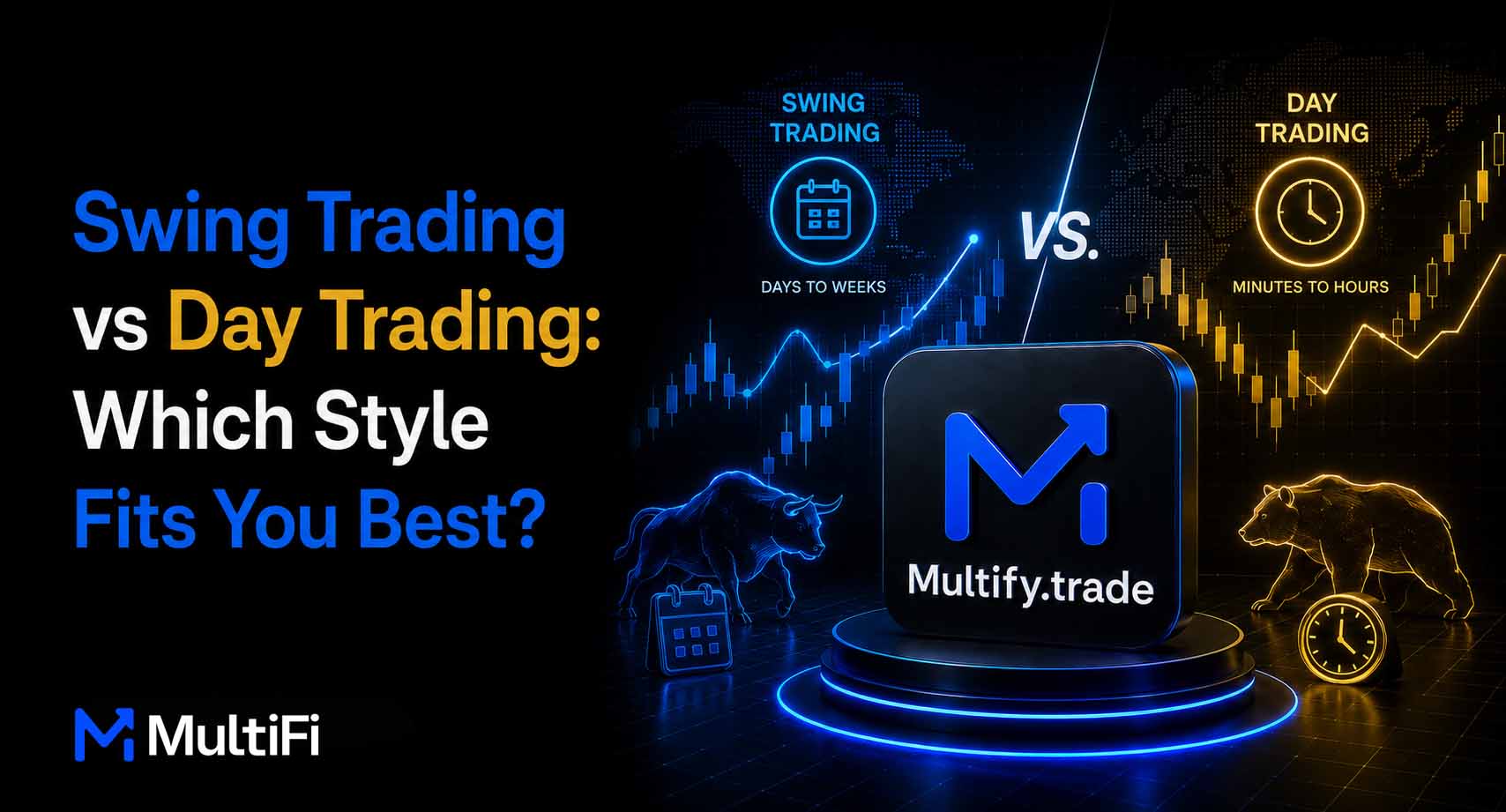
What’s the Difference Between Swing and Day Trading?
| Factor | Day Trading | Swing Trading |
| Holding Period | Hours to minutes | Days to weeks |
| Time Commitment | 6-8 hours/day | 1-2 hours/day |
| Capital Requirement | $25,000+ | $2,000-$5,000 |
| Profit Target | 1-3% daily | 5-15% per trade |
Swing Trading vs. Day Trading: Which Style Is Best for You?
If you’re considering entering the financial markets, you’ve probably heard about day trading and swing trading. But here’s the thing—choosing between these two trading styles isn’t just about picking randomly. It’s about understanding your lifestyle, your capital, and your personal risk tolerance.
In Lebanon’s growing investment community, more traders are asking: “Should I focus on quick daily trades, or would a longer-term swing strategy work better for me?” The answer depends on several factors we’ll explore together.
Must Read This Blog: Mastering the Art of Trading: A Beginner’s Guide
What is Day Trading?
Understanding Day Trading
Day trading is exactly what it sounds like—buying and selling financial instruments (stocks, forex pairs, cryptocurrencies) within the same trading day. Positions are closed before the market closes, meaning you hold assets for just minutes or hours.
Think of it this way: if you’re a day trader in Beirut trading the EUR/USD forex pair, you might buy at 9:00 AM and sell at 2:00 PM. You make your profit (or loss) and walk away for the day. There’s no overnight position risk, no anxiety about what happens while you’re sleeping.
Day traders typically aim for small, consistent profits—often 1-3% per trade. They rely on quick decision-making, technical analysis, and strict discipline. They watch multiple screens, monitor market news in real-time, and execute dozens of trades throughout the day.
How Day Trading Works
Here’s the practical flow:
Pre-Market Analysis: You study technical charts and identify entry points using indicators like moving averages, RSI, or MACD
Trade Execution: You enter a position early in the trading session
Active Monitoring: You watch the position closely, ready to exit at your target or stop-loss
Position Closure: You close the trade before market close, securing your profit or loss
Review: You analyze what worked and what didn’t for tomorrow’s trades
The key word here is active. Day trading demands your presence, attention, and quick reflexes. It’s not passive investing.
Benefits of Day Trading
No Overnight Risk: You avoid gap risks where markets open with unexpected price movements
Psychological Closure: You complete trades daily, giving you a clear sense of results
No Holding Anxiety: You don’t stress about positions while sleeping or working
Compound Profits: Small daily gains can compound into significant monthly returns
Clearer Short-Term Signals: Technical patterns are often more reliable on smaller timeframes.
Must Read This Blog: Major vs Minor vs Exotic Currency Pairs: Full Guide
What is swing trading?
Understanding Swing Trading
Swing trading is the middle ground between day trading and long-term investing. As a swing trader, you hold positions for days, weeks, or sometimes a few months. You’re capturing the “swings” in price movement—the natural ups and downs that occur in market cycles.
Imagine you’re trading forex in Lebanon and you identify that USD/LBP is in an uptrend. Rather than trading the tiny intraday movements, you enter at a logical support level and hold for a week or two until the price reaches a resistance level. Your profit target might be 5-15% per trade, far larger than a day trader’s goals.
Swing traders use a mix of technical and fundamental analysis. They study daily or weekly charts rather than minute-by-minute movements. They sleep peacefully knowing their positions are working for them even while they’re offline.
Frequently Asked Questions
1. Do I need special software to start day or swing trading?
You’ll need a trading platform (Trading View, Meta Trader 4/5, or your broker’s platform), a reliable internet connection, and 2-3 monitors to view multiple charts. Day traders especially benefit from professional-grade setups. For swing trading, even a laptop and phone are sufficient.
2. What’s the minimum amount of money to start trading?
For day trading: $25,000+ (regulatory minimum in the US). For swing trading: $1,000+ (though $5,000-$10,000 is recommended). In Lebanon, forex leverage allows you to start with less, but I recommend having at least 1-2 months of living expenses as backup capital.
3. How long does it take to become profitable?
Most traders lose money in their first 6-12 months. The average timeline to consistent profitability is 2-3 years with dedicated learning and discipline. Fast-tracking this requires working with a mentor or taking structured courses. There’s no shortcut—just effort and experience.
4. Can I do both day trading and swing trading simultaneously?
Yes, many traders maintain a mix. For example, you might hold 1-2 swing positions while making 2-3 day trades daily. However, this increases complexity and emotional demand. I’d recommend mastering one before combining both.
5. What’s the biggest mistake new traders make?
Overleveraging. They use 50:1 or 100:1 leverage because they can, without understanding that leverage works against them just as hard as it works for them. New traders also fail to follow their stop-losses. These two mistakes account for 80% of new trader losses.
Must Read This Blog: Forex vs. Gold Trading: Which Market Is Right for You?
Conclusion: Your Next Steps
Choosing between swing trading and day trading isn’t a permanent decision—your preferences might shift as you gain experience. Many traders start with swing trading to learn the markets without the intensity, then experiment with day trading.
Your financial future isn’t determined by whether you choose day or swing trading. It’s determined by whether you master the fundamentals of risk management, emotional discipline, and continuous learning.
Ready to start your trading journey? Open a demo account with your chosen broker and paper-trade for 30 days. Track your results. Then decide which style genuinely fits your life and personality.
In this article