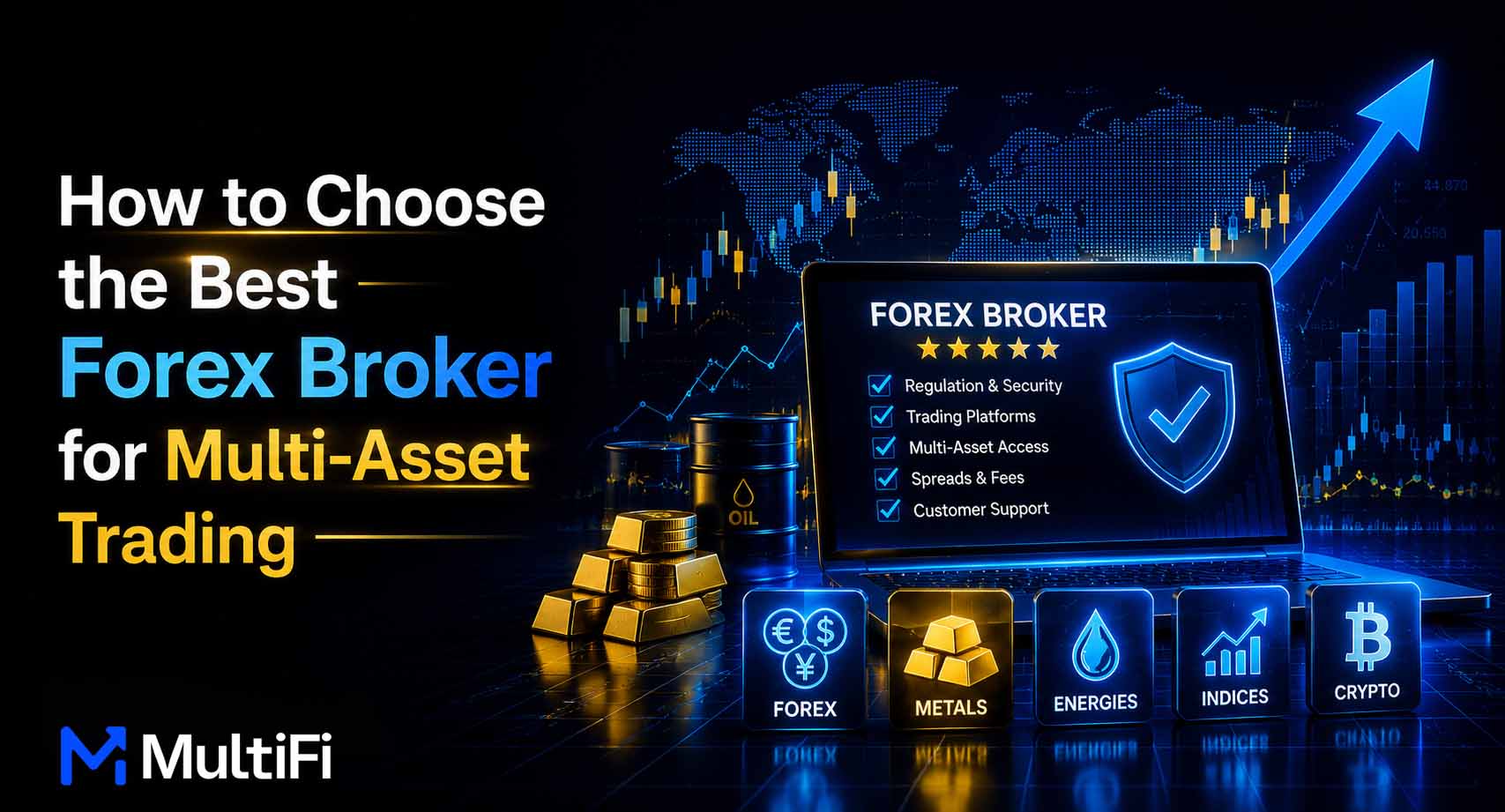
How to Choose the Best Forex Broker for Multi-Asset Trading
MultiFi
25 August 2026
Reading Time - 8 minutes
Choosing the right forex broker can be the difference between profitable multi-asset trading and costly mistakes. With hundreds of platforms claiming to be the best, it’s easy to feel overwhelmed—especially if you’re new to forex trading in Lebanon.
Whether you want to trade forex pairs, commodities, or indices, a trusted multi-asset trading platform ensures your money is safe, your trades execute smoothly, and you get support when you need it. This guide walks you through the essential factors to consider when selecting a forex broker that fits your needs and goals.
What to Look for in a Multi-Asset Broker
Before diving deeper, here’s what matters most:
- Regulatory compliance (licensed in Lebanon or recognized jurisdictions)
- Low spreads and transparent fees (no hidden charges)
- Fast trade execution and reliable platform stability
- Multiple asset classes (forex, commodities, indices, stocks)
- Strong customer support available in your time zone
- Beginner-friendly tools with educational resources
What is Multi-Asset Trading?
Multi-asset trading means buying and selling different types of financial instruments through a single platform. Instead of using separate brokers for forex pairs, commodities, or indices, a multi-asset broker lets you access them all in one place.
For traders in Lebanon, this is incredibly convenient. You might trade EUR/USD in the morning, move to gold prices at noon, and switch to tech stocks in the afternoon—all without logging into different accounts. This approach saves time, reduces fees, and gives you more control over a diversified portfolio.
How Does Multi-Asset Trading Work?
When you open an account with a multi-asset forex broker, you get access to multiple markets through one trading terminal. Here’s the flow:
- You deposit funds into your broker account
- The broker provides you with a trading platform (MT4, MT5, or their proprietary software)
- You can instantly switch between forex pairs, commodities, indices, and other assets
- Your account balance is shared across all asset classes
- You track all your trades, profits, and losses in one dashboard
Key Factors When Choosing a Forex Broker for Multi-Asset Trading
1. Regulatory Compliance & Safety
Regulation is non-negotiable. Always check if your chosen broker is licensed by recognized financial authorities. In Lebanon, look for brokers regulated by entities like the CySEC (Cyprus Securities and Exchange Commission), FCA (UK Financial Conduct Authority), or other established regulators.
A regulated broker must follow strict rules about segregating client funds, maintaining capital reserves, and being transparent about fees. This protects your money if the broker faces financial trouble. Never trust an unregulated broker—no matter how attractive their offers sound.
2. Trading Platform & Tools
The trading platform is where you execute all your trades. Popular platforms like MetaTrader 4 (MT4) and MetaTrader 5 (MT5) are industry standards trusted by millions worldwide. They offer charting tools, technical indicators, automated trading (Expert Advisors), and mobile apps.
If you’re a beginner, ensure the platform is intuitive. Look for features like one-click trading, demo accounts for practice, and customizable dashboards. Advanced traders might want advanced charting, API access, or algorithmic trading capabilities.
3. Spreads, Commissions & Transparent Pricing
Spreads are the difference between the bid (sell) and ask (buy) price. Lower spreads mean you pay less when entering a trade. A typical EUR/USD spread ranges from 1-3 pips for major pairs, but the best multi-asset brokers offer tighter spreads (0.5-1.5 pips).
Beyond spreads, check for commissions, withdrawal fees, inactivity fees, and overnight holding costs (swap rates). Many brokers offer competitive spreads but hide costs elsewhere. Always read their fee schedule carefully before opening an account.
4. Range of Available Assets
True multi-asset brokers offer more than just forex. Look for platforms that include commodities (oil, gold), stock indices (S&P 500, NASDAQ), cryptocurrencies (Bitcoin, Ethereum), and individual stocks. A wider asset selection means more trading opportunities and better portfolio diversification.
For Lebanese traders, having access to both Middle Eastern and global assets is ideal. Some brokers specialize in regional markets, while others focus on international assets.
5. Customer Support & Education
Reliable customer support matters. You should be able to reach your broker via live chat, email, or phone during your trading hours. If you trade during Asian or European hours, ensure they have 24/7 support or coverage during those times.
Educational resources are equally important, especially for beginners. Look for brokers offering webinars, tutorials, trading guides, and market analysis. This helps you improve your skills and make informed trading decisions.
6. Account Types & Minimum Deposits
Different brokers offer various account types suited to different traders. Beginners typically benefit from demo accounts (practice with virtual money) and standard accounts with reasonable minimum deposits. Some brokers offer micro accounts (as low as $10-100 minimum), while professional accounts may require $10,000 or more.
Choose based on your budget and experience level. A lower minimum deposit doesn’t mean lower quality—it just means more accessibility.
Step-by-Step Guide: How to Choose Your Multi-Asset Broker
Step 1: Check Regulatory Status & Credentials
Visit the broker’s official website and look for their regulatory information. Cross-check their license number with the regulator’s official database. Never proceed with an unregulated broker.
Step 2: Review the Trading Platform
Most brokers offer a demo account. Sign up, explore the platform, and test its features. Try placing trades, adjusting indicators, and navigating the interface.
Step 3: Compare Spreads & Fees
Create a spreadsheet comparing spreads, commissions, and fees across 3-5 brokers. Calculate how much these costs would impact your trading.
Step 4: Verify Asset Availability
List the assets you want to trade. Check if your shortlisted brokers offer all of them with competitive pricing.
Step 5: Test Customer Support
Contact customer support with a question. Assess their response time, knowledge, and helpfulness.
Step 6: Make Your Choice & Start with Small Deposits
Open an account with your chosen broker. Start with the minimum deposit or a small amount you’re comfortable losing while you learn.
Expert Tips for Selecting a Multi-Asset Broker
Read Recent Reviews: Check independent review sites and forums. Avoid brokers with consistent complaints about withdrawal delays or platform issues.
- Look for Account Insurance: Some brokers offer client fund protection up to a certain amount. This adds an extra layer of security.
- Compare Leverage & Risk Management: Different brokers offer different leverage ratios. Beginners should stick with lower leverage (1:10 or 1:50) to minimize risk.
- Mobile Trading: Ensure the broker has a reliable mobile app if you plan to trade on the go.
- Bonuses & Promotions: Be cautious with brokers offering unrealistic bonuses. Focus on functionality over flashy offers.
Common Mistakes When Choosing a Forex Broker
- Choosing based only on lowest spreads: Low spreads are great, but they don’t matter if the broker is unregulated or has slow execution.
- Ignoring regulation: This is the #1 mistake. Unregulated brokers can disappear with your funds.
- Overlooking platform stability: A platform that crashes during volatile markets will cost you real money.
- Not testing a demo account: Always practice first. A demo account shows you exactly what the real trading experience will be like.
Frequently Asked Questions (FAQ)
Q1: What is the minimum deposit for most multi-asset brokers?
A: Most brokers have minimum deposits ranging from $10-$500. Some offer micro accounts with deposits as low as $1, while professional accounts may require $10,000 or more. The best approach for beginners is to start with the lowest deposit available to learn without risking too much capital.
Q2: Is it safe to trade forex in Lebanon?
A: Yes, forex trading is safe when you use a regulated broker. Always verify the broker’s license with recognized regulators like CySEC, FCA, or ASIC. Avoid brokers claiming to be offshore or unregulated. Regulated brokers are required to segregate client funds and maintain financial reserves, protecting your investment.
Q3: Can I trade both forex and commodities on the same platform?
A: Yes, most modern multi-asset brokers allow you to trade forex, commodities, indices, cryptocurrencies, and stocks from a single account. This convenience is a major advantage of choosing a multi-asset broker. Always confirm the specific assets available before opening an account.
Q4: What’s the difference between fixed and variable spreads?
A: Fixed spreads remain the same regardless of market conditions, offering predictable costs. Variable spreads fluctuate based on market volatility—they’re tight during calm markets but widen significantly during breaking news or market shocks. Fixed spreads are preferable for beginners, while experienced traders often accept variable spreads for potentially tighter costs.
Q5: How long does it take to withdraw funds from a broker?
A: Reputable brokers typically process withdrawals within 2-5 business days. Bank transfers may take longer (3-7 days), while e-wallet withdrawals are usually instant. Always check the broker’s withdrawal policy before opening an account. Delays are a red flag; consider it when making your decision.
Conclusion: Find Your Perfect Multi-Asset Broker Today
Selecting the best forex broker for multi-asset trading doesn’t have to be complicated. By prioritizing regulation, testing platforms, comparing fees, and reading reviews, you’ll find a broker that fits your needs perfectly.
Remember: the cheapest broker isn’t always the best. Focus on safety, reliability, and features that support your trading goals. Start small, use demo accounts to practice, and scale up as you gain confidence.
Ready to start your multi-asset trading journey? Take action today by comparing the top regulated brokers, opening a demo account, and beginning your path to financial independence. Your perfect multi-asset trading platform awaits.
In this article