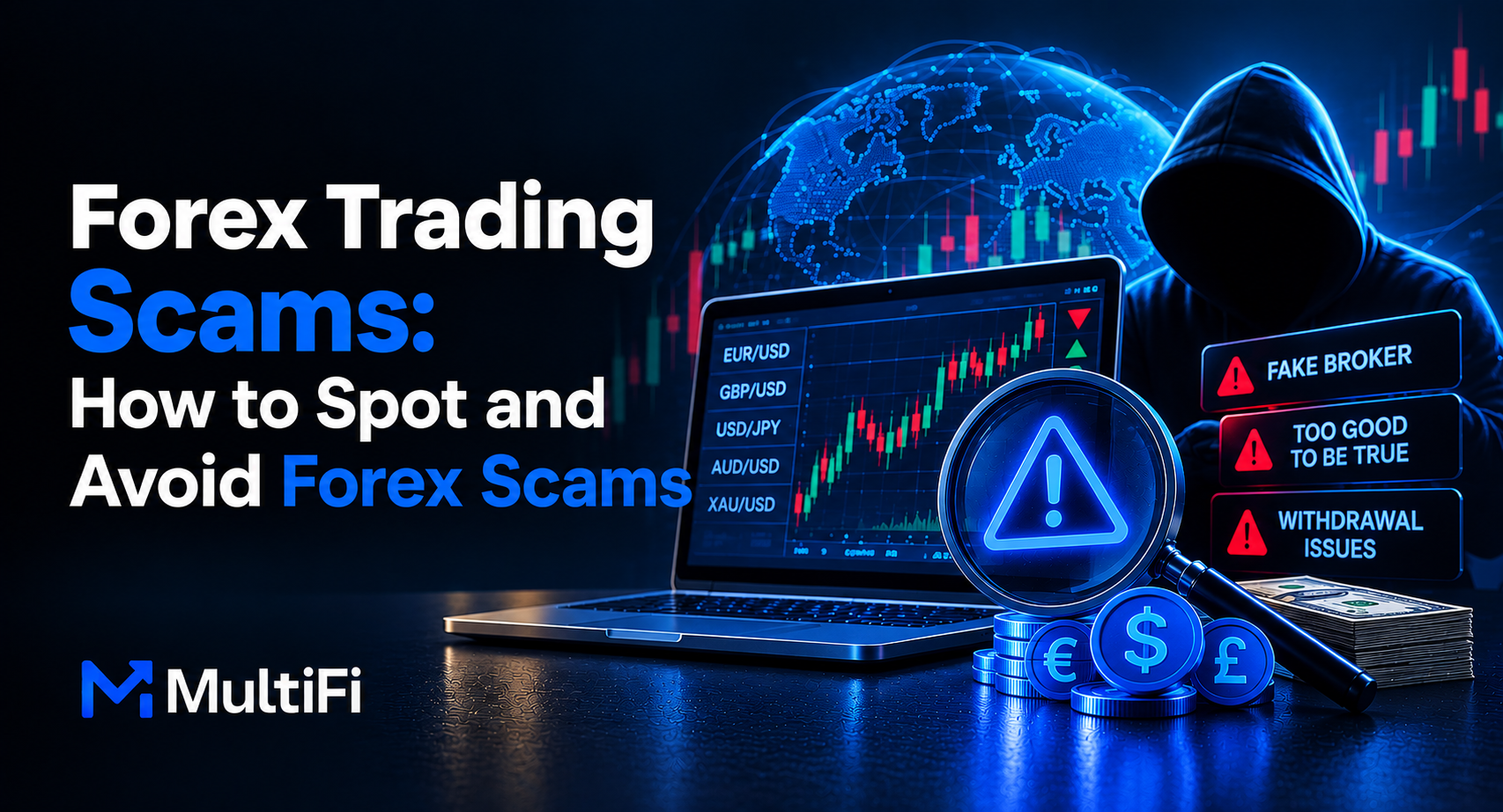
Forex Trading Scams: How to Spot and Avoid Forex Scams
MultiFi
18 September 2026
Reading Time - 8 minutes
A message arrives on WhatsApp. A friendly stranger says she made $4,000 last week from forex and wants to “show you how.” A few days later, you’re depositing money into an app that looks professional.
Then the withdrawal button stops working.
This story repeats across the world, and it’s why anyone interested in forex trading in Lebanon should learn the warning signs before funding an account. Forex itself isn’t a scam. But the industry attracts fraudsters because people want quick money and the rules are hard to see.
Let’s fix that. By the end of this guide, you’ll know the common scams, the red flags, and a simple checklist to stay safe.
How to Spot a Forex Scam
- They guarantee profits or promise “risk-free” returns
- They pressure you to deposit quickly
- The broker has no verifiable licence
- You’re asked to pay fees to withdraw your own money
- Someone you met online manages your account for you
- Payments go to personal accounts or crypto wallets
What Is a Forex Scam?
A forex scam is any scheme that uses foreign exchange trading as bait to take your money dishonestly. Some scammers run fake brokers. Others sell useless signals or pretend to manage accounts. The trading is just a story.
Real forex trading involves risk, and no honest firm can promise you returns. Keep that sentence in mind. It filters out most fraud.
Why Traders in Lebanon Are Often Targeted
Many people in Lebanon are looking for ways to protect savings and earn income in hard currency after years of economic strain. Scammers know this. They use social media, messaging apps and fake success stories to appear trustworthy.
Because retail forex here is usually offered by international brokers, it can be harder to tell who is licensed. That gap is exactly what fraudsters exploit. Slowing down is your best defence.
The 7 Most Common Forex Scams
1. Fake or Unregulated Brokers
The website looks polished, the platform shows charts and the support agent is friendly. But there is no valid licence, and your deposit goes nowhere real. These firms often disappear or block withdrawals.
2. Managed Account Fraud
Someone offers to trade for you and promises steady monthly returns. You send money, see fake profits on a screen, then can’t withdraw. Genuine managers are licensed and never ask for access to your login.
3. Signal Seller Scams
Sellers claim “95% accuracy” and show cherry-picked screenshots. Real traders lose sometimes. Perfect records are a marketing trick.
4. Ponzi and Pyramid Schemes
Early investors are paid with new investors’ deposits. The scheme looks legitimate until recruitment slows down and it collapses. Any program me that rewards you for bringing friends deserves extra suspicion.
5. Romance and “Pig Butchering” Scams
A stranger builds a friendship or romance over weeks, then introduces a “special” trading platform. Small early withdrawals build your trust. Then you invest more, and the platform locks you out.
6. Robots and “Auto-Profit” Software
“Set it and forget it” trading bots claim guaranteed income. Most are unproven or rigged, and the results shown are fabricated.
7. Recovery Scams
After you lose money, someone contacts you offering to get it back for an upfront fee. They are often the same criminals or their partners. Real recovery never starts with you paying first.
Red Flags Checklist
Watch for any of these:
- Unrealistic returns such as 10% weekly or “double your money”
- Urgency (“this offer ends tonight”)
- No regulator or a fake one, or a licence number you can’t verify
- A withdrawal fee, tax or “unlock” charge that appears only when you try to cash out
- Unsolicited contact through social media, dating apps or messaging groups
- Poor company details, including no physical address or a very new website
- Unusual payment methods like personal transfers, gift cards or crypto sent to an individual
Step-by-Step: How to Vet Before You Trade
- Pause. Never deposit on the day you first hear about a platform.
- Search the company name plus words like “scam”, “complaints” and “withdrawal”.
- Verify the licence on the official regulator’s website. Type the address yourself.
- Compare the domain. Fake sites copy real brands with tiny spelling changes.
- Test with a small deposit and request a withdrawal early.
- Keep your credentials private. Never share passwords, one-time codes or screen access.
- Use a demo account to check that the platform behaves like the live market.
This takes under an hour and can save you your savings.
How Forex Risk Management Protects You From More Than Markets
Most people think forex risk management only covers stop-losses. It also covers who you trust.
- Only risk money you can afford to lose. This limits damage if something goes wrong.
- Never put all your funds with one provider.
- Risk small per trade, commonly 1-2% of your balance.
- Withdraw profits regularly so gains aren’t sitting with a company you can’t verify.
- Document everything. Save chats, receipts and account details.
A trader with these habits is harder to scam and less likely to be wiped out by a bad trade.
A Real-Life Style Example
Here’s a typical case, based on patterns reported by regulators worldwide. Rami, a 29-year-old graphic designer, joins a Telegram group about forex trading in Lebanon. The “mentor” posts daily profit screenshots and offers a “private VIP account manager.”
Rami deposits $300 and sees it grow to $450 in a week. He withdraws $50 successfully, which builds his confidence. So he deposits $2,000 more.
Then the platform announces a “tax clearance fee” of 15% before any further withdrawals. When Rami refuses, the account is frozen.
Notice the pattern: a friendly contact, early wins, a small successful withdrawal, then a big deposit and a sudden fee. If you’re exploring forex trading in Lebanon, memorise that pattern. And remember that a genuine forex broker in Lebanon or anywhere else takes withdrawal fees from your profits, not as a surprise entry fee.
What To Do If You’ve Been Scammed
- Stop sending money, even if they say it will release your funds.
- Save all evidence: screenshots, emails, transaction IDs and chats.
- Contact your bank or payment provider immediately and ask about a dispute or recall.
- Report it to local authorities and to the regulator the firm claimed to be under.
- Warn others through official fraud reporting channels.
- Ignore recovery offers that demand upfront fees.
Be gentle with yourself. Scammers are professionals, and intelligent people fall for them.
Expert Tips For Choosing a Trustworthy Broker
- Prefer brokers licensed by recognised authorities such as the FCA, CySEC, ASIC, FSCA or DFSA
- Confirm segregated client funds and negative balance protection
- Read reviews from several independent sources, not just the broker’s own site
- Look for clear, published fees and withdrawal terms
- Treat lists that claim the best forex broker in Lebanon as starting points only, and verify every claim yourself
Conclusion
Forex trading in Lebanon can be legitimate, but it demands more caution than most people expect. Guaranteed returns, pressure to deposit and unverifiable licences are all reasons to walk away.
Verify first, start small and keep control of your account. If you’re comparing a forex broker in Lebanon, focus on transparency, regulation and withdrawal reliability before anything else.
Want to learn the safe way? Open a Multifi.trade demo account, practise without risk and read our regulation and security information before you go live.
Risk warning: Forex and CFD trading carries a high risk of loss and may not be suitable for everyone. This article is educational and not financial advice.
Frequently Asked Questions
1. How can I tell if a forex broker is a scam?
Check for a licence number and verify it on the regulator’s official website. Be careful if the broker promises guaranteed profits, pressures you to deposit quickly, or asks for extra fees before a withdrawal. Search independent reviews and test a small withdrawal before depositing serious money.
2. Are all forex brokers scams?
No. Many brokers are licensed, audited and operate honestly. The problem is that unlicensed firms look very similar online. Regulation, segregated client funds and a clean withdrawal record are the main signs of a legitimate broker, though none of them removes normal trading risk.
3. Can I recover money lost to a forex scam?
Sometimes, but not always. Contact your bank or payment provider quickly, keep all evidence and report the case to authorities. Avoid anyone offering guaranteed recovery for an upfront fee, because recovery scams target previous victims and are very common.
4. Is forex trading in Lebanon safe for beginners?
It can be, if you choose a verified broker, use a demo account first and apply solid risk management. Never trade money you need for rent, food or emergencies, and avoid anyone who promises quick, guaranteed income.
5. Are forex signals and trading bots worth buying?
Treat them with caution. No signal service or robot can guarantee profit, and many show edited results. If you try one, test it on a demo account for several weeks, check independent performance records and never pay for a product that guarantees returns.
In this article